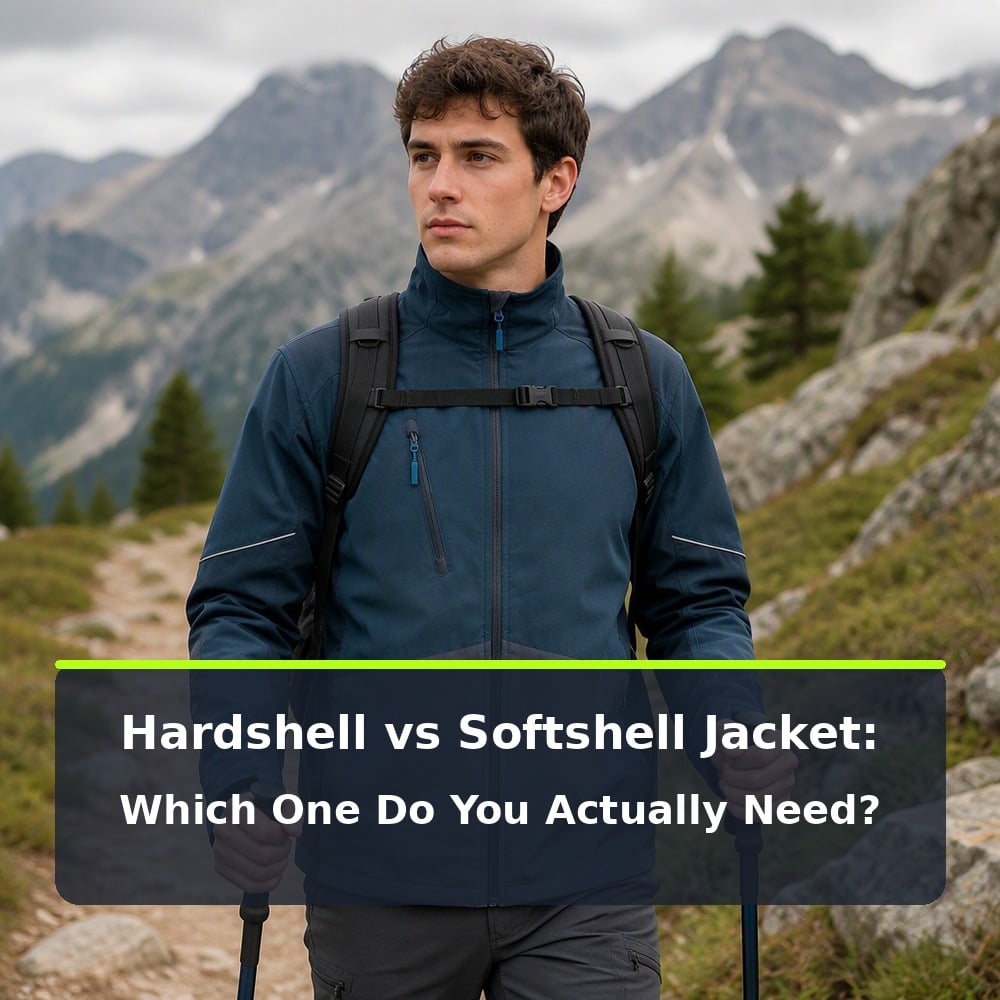
Every outdoor buyer eventually faces the shelf split: hardshell jackets on one side, softshell jackets on the other, both called "shell", both promising weather protection. Buy wrong and you either sweat inside a rigid rain barrel or get soaked through a cozy stretch layer. The difference is not marketing — it is two genuinely different tools for two genuinely different weather jobs. This guide breaks down what each shell does, when to wear it, and the stretch hardshell jacket category that closes the gap between them.
A hardshell jacket is a rain and wind barrier: waterproof, windproof, built to stop weather at the surface. A softshell jacket is a breathable movement layer: stretchy, warm, water-repellent but not waterproof. The hardshell jacket keeps weather out; the softshell keeps comfort in. Everything else in this guide is detail on that split.
What a hardshell jacket actually does ?
The job of a hardshell jacket is barrier duty. The fabric is waterproof — rain beads and runs off through hours of sustained weather — and fully windproof, which matters more than most buyers expect: wind cuts through insulation faster than drizzle does. Seams are taped so water cannot sneak through the stitching, and openings seal: storm collar at the neck, cuffs that close tight, a hem that cinches down.
The trade-off is historic: the hardshell jacket used to be stiff and noisy, tolerable in a storm but unpleasant the rest of the day. That is the gap the stretch hardshell jacket closes — flex zones at the shoulders and elbows that follow reach moves and pole plants without the cardboard feeling. The barrier stays; the penalty goes.
What a softshell jacket does instead ?
A softshell jacket flips the priorities. The fabric is stretchy and soft, warm like a light insulator, and highly breathable — built for output: climbing, skiing, working hard in cool conditions. It shrugs off drizzle and snow showers with a water-repellent finish, but in sustained rain it soaks through, because softshell fabric trades the waterproof membrane for breathability and comfort.
The rule of thumb: softshell for motion and cool dry weather, the hardshell jacket for weather itself. If the forecast says rain, the softshell stays home and the hardshell jacket goes in the pack — no softshell replaces a hardshell jacket when the sky opens.
Decide by weather, not by season
Pick the shell by what the sky is doing, not the calendar. Steady rain, driving wind, hours outside in it — the hardshell jacket, every time. Cold, dry, high-output movement — softshell, because a hardshell jacket over a working body turns into a sauna long before the rain arrives. Mixed and unpredictable — the stretch hardshell jacket wins: barrier-grade protection with enough flex and breathability to keep moving when the weather stalls.
The hoodless question
Some hardshell jacket models come without a hood — a stand collar with a storm flap instead. That is not a downgrade; it is a use-case choice. A collar seals cleanly, layers under a separate hood or beanie when needed, packs smaller, and never flaps across your view in gusts. Hoods matter on climbing and bike shells where the weather sits on your head all day; for hiking, trekking and town-to-trail use, a well-built storm collar on a hardshell jacket covers the same weather with less bulk. Buyers who live in rainy climates often run a hoodless hardshell jacket daily and keep a hooded shell for the mountain days.
where each shell sits in the system ?
Shells do not work alone — they sit at the top of a layering system, and each type pairs differently. A hardshell jacket rides over a fleece or insulated midlayer as the weatherproof lid: nothing below it gets wet, and the seals at collar, cuffs and hem close the system against wind pumping through. In milder conditions the same hardshell jacket works over a base layer alone, and a stretch hardshell jacket stays comfortable even next-to-nothing underneath because the flex zones move with the body instead of against it.
A softshell jacket, by contrast, is often the system itself — its brushed inner face adds warmth, so it replaces the midlayer plus shell combination on dry cold days. Program buyers take note: a hardshell jacket plus a light fleece covers more weather combinations than a single heavy softshell, which is why uniform and retail programs tend to spec the hardshell jacket as the anchor piece and add softshell pieces for the dry months.
how each shell ages ?
The two shell types age differently, and buyers who plan fleets should know how. A hardshell jacket ages at its water-repellent coating: after heavy use, rain stops beading and starts wetting the fabric face, even though the waterproof membrane underneath still holds. The fix is maintenance, not replacement — a warm wash with mild detergent and a low-heat tumble reactivates the coating, and no fabric softener should ever touch the garment because it clogs both membrane and coating. Treated this way, a quality hardshell jacket stays in service for seasons.
A softshell jacket ages at the stretch and the face: abrasion from packs and harnesses eventually fuzzes the surface, and the water-repellent finish fades on the same schedule. Machine washing refreshes some of it, but the softshell's retirement is usually cosmetic, not structural — it keeps working after it stops looking new. For fleets, that difference matters: the hardshell jacket is the piece that must stay technically alive, so the hardshell jacket earns the care schedule; the softshell is the piece that gets replaced when it looks spent.
What to check before buying ?
Five checks cover both categories. Seams: taped on any hardshell jacket, or the waterproof claim fails at the first stitched line. Stretch: flex zones at shoulders and elbows, not just fabric that is technically flexible. Seals: collar, cuffs and hem that actually close. Certification: OEKO-TEX Standard 100 materials — the standard European retail asks for by name. Sizing: EU-graded charts XS to 3XL that match your market without re-charting.
For programs and brands, add two more: logo method (printing is preferred on hardshell jacket fabric — embroidery perforates the waterproof layer unless sealed patches are used) and pre-production samples — the sample you approve on either shell type is the reference for the production run.
Choose a hardshell jacket when weather is the enemy: rain, wind, exposure. Choose a softshell when movement is the priority and the weather is merely cool. Choose a stretch hardshell jacket when you refuse to choose — barrier protection with flex where the body bends, sealed at collar, cuffs and hem, hoodless for clean layering or hooded for full exposure. Check the seams, the seals, the certification and the sizing before you commit to a hardshell jacket order.
 EN
EN