 EN
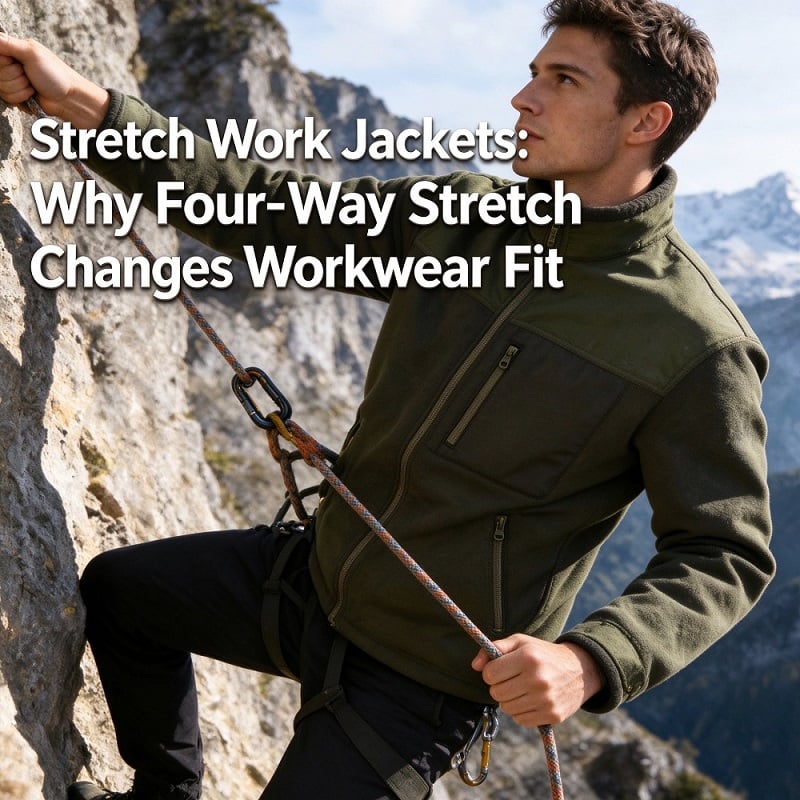
Jackets laboris extensibiles textum extensibilem quadridirectionalem utuntur (spandex vel elastanum in polyestere vel cotone mixtum), ita ut vestis cum utente moveatur dum brachium extendit, incurvat, aut scalae ascendit. Praecipua commutatio quam emptores administrare debent est inter extensionem et resistentiam ad attritionem — plus spandex saepe significat jacket commodiorem, sed faciem externam cito deteriorantem in artibus asperis.
Hoc est manuale pro distributoribus, dominis brandorum, et turmis procurandi securitatis quae iacetas opus elasticas emunt pro programmatibus opus in America Septentrionali et Europa. Nos has vestes secuimus et consuimus pro programmatibus OEM, et quaestiones infra sunt quas nostri ingeniarii venditionis saepissime audiunt antequam ordo exemplaris exeat. Si tu iacetas opus elasticas cum softshells aut vestibus opus rigidis comparas, hoc manuale tibi adiuvarit ut eligeas.
Quid "elasticitas" revera significet in iaceta opus
Elasticitas in vestibus opus venit ex parva parte elastani (spandex) mixtae in textili. Duo vocabula saepissime occurrunt cum emptores iacetas opus elasticas specificant:
- Elasticitas binae viarum: textilis solummodo per trama extenditur. Bene pro commoditate, sed limitata cum usor super caput porrigit aut torquet.
- Quattuor Viis Extensibilis: textilis tam per trama quam sursum-deorsum extenditur. Hoc est quod plerique emptores revera significant cum dicunt "iaceta opus elastica" — movetur cum corpore in pluribus directionibus.
Percentagium elastani parvum est, saepe 2% ad 5% per pondus. Ceterum est polyester, cotōn, aut mixtūra poly-cotōnis. Nōn supponās quod "stretch" significet tenuem aut leviorem. Iaccae laboris cum stretch possunt esse factae ex textīlis mediī vel gravissimī ponderis, et pondus quod eligitur debet convenīre artī et tempōrī anni. Cum iaccae laboris cum stretch comparās, trahē textīlem in utrāque directiōne et sentī recuperātiōnem — bona iacca laboris cum stretch statim revertitur, dum vīlior post paucōs tractūs laxa manet.
Factor |
Iacca laboris texta communis |
Iacca laboris cum stretch |
Structura textilis |
Texta simpliciter texta, parum cedens |
Mixtūra cum elastāne, stretch quattuor directiōnum |
Perveniēns et flectēns |
Iacca trahit in humerīs |
Cum corpore movetur |
Superpositiō super strāta basalia |
Adaptat arctē, potest constringere |
Facilius superponī potest |
Resistentia ad abrasionem |
Alta (tessitura piana densa) |
Leggermente inferiore — la faccia esterna si consuma più velocemente |
Sensazione restrittiva |
Comune nelle versioni economiche |
Reducta |
Migliori professioni |
Banco statico, magazzino, camminata lenta |
Elettricità, climatizzazione, coperture, installazioni |
Il punto non è che il tessuto elasticizzato sostituisca ogni giacca da lavoro. Piuttosto, per le professioni in cui l’equipaggio lavora con le braccia alzate, in ginocchio o su scale, una giacca elasticizzata riduce la trazione costante che logora sia il capo sia l’operatore. Una giacca rigida standard funziona bene su un banco; non appena l’utente sale su una scala o si infila sotto un lavandino, la differenza di comfort diventa evidente. Gli acquirenti che hanno testato entrambi i tipi ci dicono spesso che, una volta provata la giacca da lavoro elasticizzata, i loro team la richiedono sistematicamente in ogni nuovo ordine.
Scelte di tessuto che gli acquirenti confrontano abitualmente
Quando si approvvigionano giacche da lavoro elasticizzate, la superficie del tessuto determina gran parte delle prestazioni:
- Polyester-spandex stretch twill. Durable, wrinkle-resistant, good for outdoor and trade work. The default for most stretch work jackets.
- Cotton-poly-spandex (chino or canvas stretch). Softer hand, more casual look, better for uniform programs where a rugged workwear look is not required.
- Stretch softshell (bonded). Combines a four-way stretch face with a windproof membrane and a brushed back. Packs wind resistance into the stretch category.
- Ripstop stretch. A ripstop grid woven into the stretch face for better tear resistance in abrasive trades.
Ask the supplier for the actual fabric composition and weight, not just the word "stretch." A lightweight stretch shirting is not the same garment as a heavyweight stretch canvas. If you are building a winter program, pair a heavier stretch face with a bonded fleece or microfleece back; if you are building a three-season jacket, a lighter stretch twill with a simple mesh or taffeta lining breathes better. Most stretch work jackets in the North American market land in the midweight range, but the exact weight should come from the supplier's spec sheet, not from this guide.
Construction details that matter
Stretch fabric only performs well when the cut and seams are built for it. A cheap stretch work jacket uses a regular rigid pattern with a stretch fabric, and you lose most of the benefit. When you evaluate stretch work jacket samples, lay them flat and look at the shoulder seam and elbow shape:
- Articulated elbows and shoulders. Flat or set-in sleeves waste the stretch. Look for pre-shaped elbows and gusseted shoulders.
- Pocket placement. Pockets on stretch fabric sag over time. Reinforced pocket bags and bar-tacks at stress points matter more on a stretch work jacket than on a rigid one.
- Cuffs and hem. Adjustable cuffs and a drawcord hem keep the jacket in place when the wearer reaches up.
- Zippers and vents. YKK-style zippers last; underarm or back vents release heat on high-output jobs.
- Reinforcement at high-wear zones. Shoulders, elbows, crotch of matching stretch pants — double-needle or bartack where the fabric flexes most.
How a stretch work jacket should fit
A good fit test on a stretch work jacket is not standing up straight in front of a mirror. Put the sample on a real worker and have them do three movements: reach overhead as if changing a wall fixture, bend at the waist as if picking up a tool, and sit on a low stool. The jacket should stay in place, ride up no more than an inch, and not pull across the shoulders. If the fabric stretches but the armhole is too small, the jacket still feels tight.
Laundering and durability
Stretch work jackets take standard industrial laundering, but the elastane does degrade over very high heat. Ask the supplier for the recommended wash temperature and tumble setting. Repeated very hot washes break the spandex down faster, and the jacket loses its recovery. For rental programs that run hot washes, confirm with the factory whether the chosen stretch fabric holds up across the expected number of cycles.
When to skip stretch?
Stretch is not always the right answer. In heavy abrasion trades — concrete work, demolition, steel — a rigid heavyweight canvas or FR-rated jacket will outlast a stretch work jacket on the jobsite. In those programs, use a stretch work jacket for the crew's everyday or cooler-weather layering piece, and reserve the rigid heavyweight for the abusive tasks. For electrical, HVAC, facility maintenance and installation crews, however, a well-built stretch work jacket usually becomes the default jacket on every reorder.
About KINGLONG (NEO SAFETY® / BIZLINK®): an SGS and ICS certified workwear manufacturer producing stretch work jackets, softshells, fleece, trousers and vests for distributors and private-label brands. We support OEM/ODM with custom fabric weights, colors, embroidery and size-range programs. Contact our team for swatches and bulk pricing.