 EN
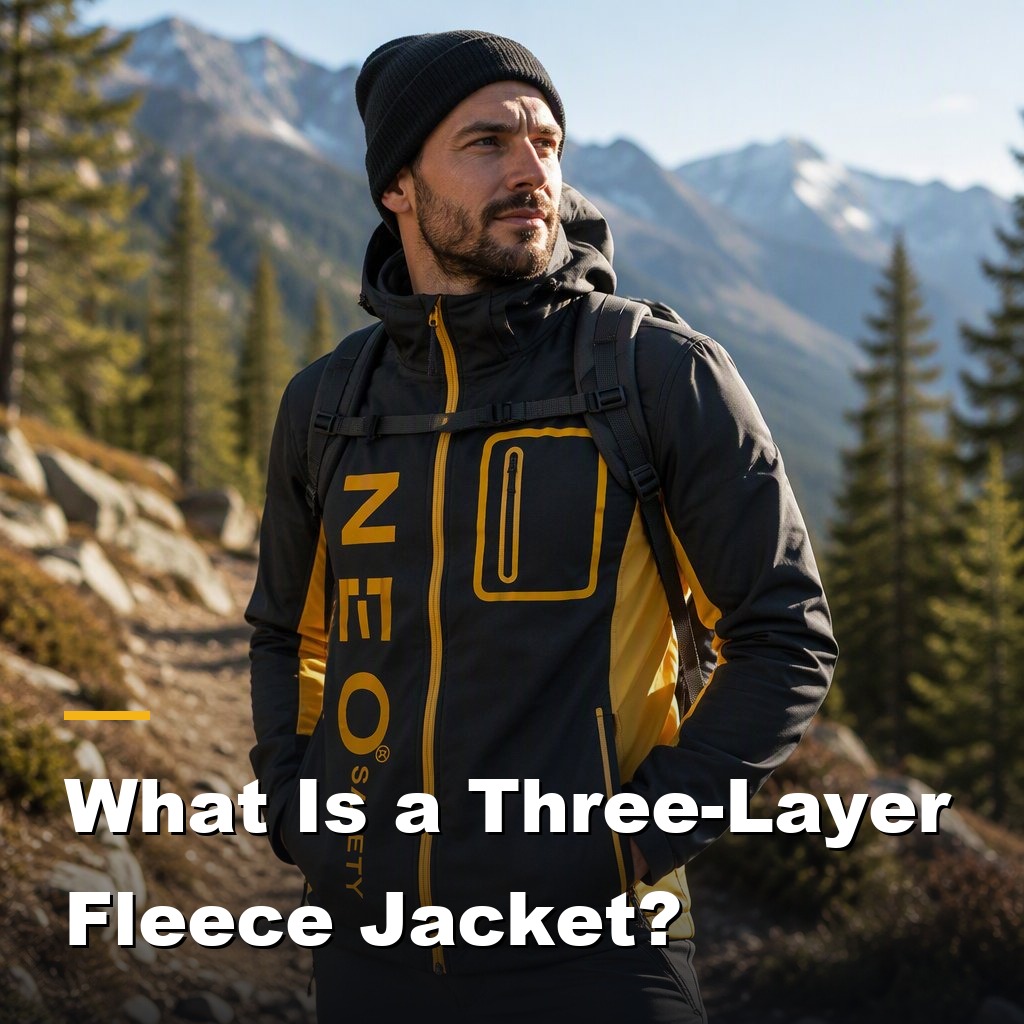
A three-layer fleece jacket is a bonded composite of three fabrics laminated together: an outer stretch face, a middle windproof and breathable membrane, and a soft polar-fleece inner layer. It outperforms a regular single-layer fleece because the membrane blocks wind and light rain while the fleece traps heat, so the jacket stays warm without turning into a bulky, wind-soaked layer. For buyers sourcing workwear, it is the lighter, more weather-resistant alternative to a plain fleece and a step below a full hardshell.
If your crew works in wind, damp cold or variable weather, this is the layer most programs overlook. Here is what it actually is, where it fits, and what to spec.
What "three-layer" means in practice ?
In fleece and softshell terminology, "three-layer" (3L or 3-layer bonded) refers to three fabrics permanently laminated into one panel:
Outer face fabric — usually a stretch woven or knitted face that resists abrasion and sheds light moisture.
Middle membrane — a thin, windproof, water-resistant but breathable layer that stops wind chill and light rain from passing through, while letting body vapor escape.
Inner fleece — a brushed polar-fleece layer that traps warm air against the skin.
A regular single-layer fleece is only step 3. It is warm against the skin, but wind blows straight through it and it soaks up rain. Bonding the membrane and outer face onto the fleece is what turns a cozy midlayer into a weather-usable jacket.
Factor |
Regular single-layer fleece |
Three-layer bonded fleece |
Construction |
Fleece only |
Fleece + membrane + outer face |
Wind resistance |
Low — wind passes through |
Good — membrane blocks wind |
Light rain |
Soaks in |
Resists light rain |
Breathability |
Good |
Moderate — membrane adds resistance |
Warmth (fleece side) |
High |
High — fleece inner layer |
Bulk |
Bulky |
Moderate |
Best role |
Midlayer indoors / active |
Outer or midlayer in cool wind |
The three-layer fleece sits between a plain fleece and a softshell: warmer than a softshell thanks to the inner fleece, more weather-resistant than a plain fleece thanks to the membrane.
When to choose it for a work program ?
Spec a three-layer bonded fleece when:
The job is cool but windy — construction sites, transport yards, outdoor maintenance, courier and delivery routes.
Crew members need warmth that still blocks wind, rather than a pure midlayer they only wear indoors.
You want a single jacket that works as an outer layer in 5–15 °C (40–60 °F) and layers under a shell below that.
Your buyers ask for "lightweight but warm" — the bonded construction gives warmth without the thickness of a heavy pile fleece.
Skip it when:
The job is heavy rain — a bonded fleece resists light drizzle, not sustained downpour. Pair it with a rain shell, or choose a dedicated shell.
The job is extremely high-output and the crew overheats inside any membrane layer — an unmembraned fleece breathes better.
About KINGLONG (NEO SAFETY® / BIZLINK®): an SGS and ICS certified workwear manufacturer producing bonded fleece, softshell and winter thermal garments for brands and distributors. We support OEM/ODM, custom fabric choices, colors, logo printing and size-range programs. Contact our team for fabric swatches and bulk pricing.